Scleral contact lenses have been around for a very long time.
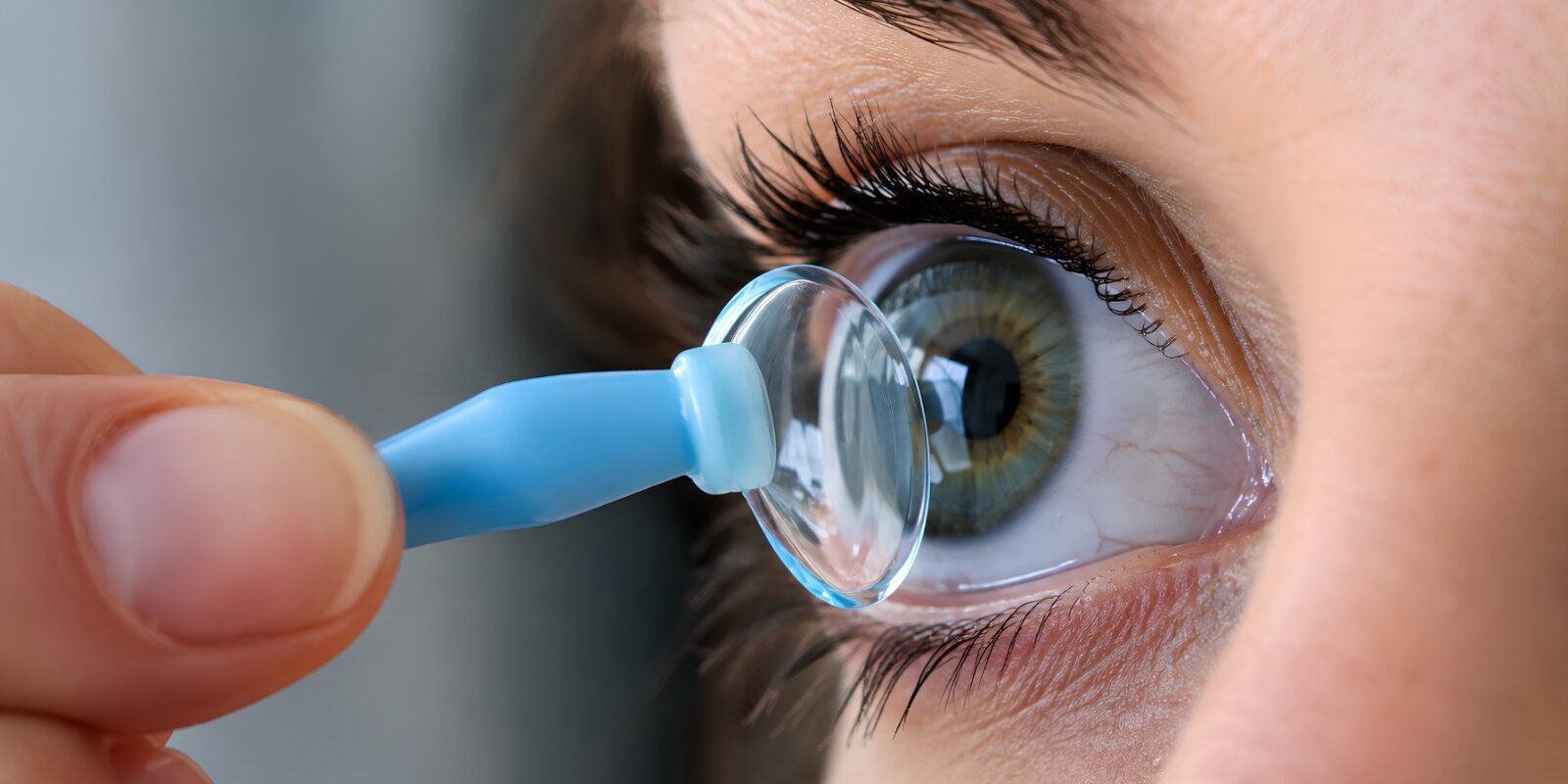
These are large, hard contact lenses that cover the entire cornea and rest gently on the sclera, the white part of your eye.
What makes scleral lenses particularly remarkable, however, isn’t simply their history. It’s what modern scleral lenses can do for people whose vision cannot be adequately improved with conventional glasses.
Scleral Lenses Have a Surprisingly Long History
The first scleral contact lenses were made from glass and introduced in 1887.
Yes, believe it or not, the first contact lenses were invented that long ago.
Those early lenses came with significant complications. Firstly, they were made from glass, which made them very heavy and could become painful for the wearer.
They also didn’t allow oxygen to pass through the lens and reach the avascular cornea, the front part of the eye, which has no blood vessels and receives its oxygen directly from the air.
Despite these limitations, those early scleral lenses were revolutionary. They helped lay the foundation on which modern contact lenses were built.
Today, scleral lenses are made from highly oxygen-permeable materials. As a result, the complications associated with those original glass lenses are now almost completely avoidable, provided that proper lens care is followed.
How Do Scleral Lenses Work?
A scleral lens is designed to vault over the cornea, creating a smooth optical surface that helps to neutralise the corneal irregularities and provide clearer vision.
Rather than resting directly on the cornea, the lens rests gently on the sclera, the white part of the eye.
This design is one of the reasons scleral lenses can be so valuable for people with irregular corneal conditions.
Scleral Lenses Can Restore Functional Vision
For people living with irregular corneal conditions, the impact of scleral lenses can be life-changing.
Some people are functionally “blind” without these lenses, yet can see beautifully once properly fitted with scleral lenses.
The result isn’t always perfect vision, but it can mean functional vision.
That distinction can completely change someone’s life.
For some people, poor vision previously meant that they couldn’t even get a job. With scleral lenses, they may be able to work, regain their independence and contribute to society.
They may once again be able to enjoy hobbies or go and watch their children perform or play sport.
This is what makes scleral lenses so powerful. We’re not simply talking about improving numbers on an eye chart.
We’re talking about improving someone’s ability to live their life.
Who May Need Scleral Lenses?
People who most commonly require scleral lenses include those with conditions such as:
- Keratoconus
- Pellucid marginal degeneration
- Post-LASIK ectasia, thinning of the cornea due to complications following laser corrective surgery
- Post-radial keratotomy
- Post-corneal transplant patients
These conditions can have a significant impact on someone’s everyday life, including their ability to work, participate in hobbies and enjoy important moments with their family.
For many of these patients, scleral lenses can be a game changer.
Unfortunately, in some cases where the disease has become advanced, scleral lenses may not improve the person’s vision sufficiently.
And this brings me back to something I emphasise frequently:
Early Detection Is Key
The earlier corneal disease is detected, the better the potential outcome and the less negatively it may affect a person’s life.
This is particularly important if you have family members, even distant family members, with conditions such as keratoconus or pellucid marginal degeneration.
Other factors, such as suffering from sinus problems and frequently rubbing your eyes, are also important to consider.
A corneal topographer can be used to map the shape of the cornea and identify changes that may not necessarily be obvious during the early stages of disease.
Getting a corneal topography scan every year can therefore be crucial.
You can learn more about the relationship between allergies, eye rubbing and keratoconus in our article, “Why Do I Rub My Eyes?”
The earlier we identify a developing problem, the sooner we can take appropriate action.
Scleral Lenses Aren’t Only for Corneal Disease
Another beautiful aspect of modern scleral lenses is their versatility.
They can also be used for other visual requirements.
Multifocal Scleral Lenses
Scleral lenses can correct near and distance vision simultaneously using multifocal lens designs.
This can be particularly useful for active people over the age of 45 who find glasses cumbersome during their everyday activities.
Prism Correction
Scleral lenses may also provide an option for certain patients who require prism correction but don’t want to wear glasses.
Extremely High Prescriptions
Patients with extremely high prescriptions may also benefit from scleral contact lenses where conventional options are less suitable.
A Powerful Tool for Both Adults and Children
Scleral contact lenses have become an integral part of many optometrists’ toolsets.
And they aren’t limited to adults.
Scleral lenses can help adults and children alike, depending on the person’s individual eye condition and visual requirements.
For someone who has struggled with poor vision for years, the difference that the correct lens can make can be extraordinary.
Could Scleral Contact Lenses Work for You?
Every person’s eyes are different.
The best way to determine whether scleral contact lenses are appropriate for you is through a proper assessment of your eyes, vision and individual requirements.
If glasses aren’t giving you the vision you need, you’ve been diagnosed with an irregular corneal condition, or you’d simply like to know whether scleral lenses could be an option for you, come in for a consultation.
Let’s see whether scleral contact lenses can help you see and live better.
Frequently Asked Questions About Scleral Lenses
What are scleral contact lenses?
Scleral contact lenses are large, hard contact lenses that cover the cornea and rest gently on the sclera, the white part of the eye. Modern scleral lenses are made from highly oxygen-permeable materials.
How do scleral lenses work?
Scleral lenses vault over the cornea, creating a smooth optical surface that helps to neutralise corneal irregularities and provide clearer vision. The lens rests gently on the sclera rather than directly on the cornea.
Who can benefit from scleral lenses?
Scleral lenses may be beneficial for people with conditions such as keratoconus, pellucid marginal degeneration, post-LASIK ectasia, previous radial keratotomy or following a corneal transplant.
Can scleral lenses help people with keratoconus?
Scleral lenses can help some people with keratoconus achieve functional vision when their vision cannot be adequately improved with conventional glasses. The results depend on the individual and the severity of the condition.
Are scleral lenses only used for corneal conditions?
No. Scleral lenses can also have other applications, including multifocal correction for near and distance vision, certain prism corrections and extremely high prescriptions.
Can children wear scleral lenses?
Yes. Scleral contact lenses can be used for both adults and children, depending on the individual’s eye condition and visual requirements.
Why is early detection of corneal disease important?
The earlier corneal disease is detected, the better the potential outcome and the less negatively it may affect a person’s life. A corneal topographer can map the shape of the cornea and help identify changes that may not necessarily be obvious during the early stages of disease.