Autism has been a hot topic lately. But before we begin, it’s important to understand that autism is not a disease that needs to be prevented or cured. Instead of focusing on prevention, society should focus on acceptance and inclusion—welcoming individuals with Autism Spectrum Disorder (ASD) and providing them with support, understanding, and dignity.
People with autism have a right to exist. They have differently wired brains, and their unique perspectives have made—and continue to make—profound contributions to our world.
What Is Autism Spectrum Disorder?
Autism Spectrum Disorder (ASD) is a neurological difference that affects how individuals interact, communicate, and perceive their environment. It’s not a single condition but a broad spectrum that presents uniquely in each individual.
Rather than viewing autism as a disorder, many embrace it as part of the neurodiversity movement, which celebrates neurological differences as a natural part of human diversity—recognising both the strengths and challenges they bring.
Challenges People with Autism May Face
Autism often involves a combination of characteristics, such as:
- Repetitive behaviours or restricted interests
- Sensory sensitivities
- Difficulties with communication or social interaction
- Differences in learning and processing
Some individuals require daily assistance, while others lead fully independent and successful lives. Every person on the spectrum is different—there is no single way that autism “looks.”
Movies and media have often misrepresented autism, portraying individuals as either mathematical geniuses or emotionally unstable. In reality, autism exists across a vast spectrum of intelligence, emotion, and capability.
Think of autism like a soundboard with multiple dials—each dial representing a trait such as sensory sensitivity, emotional regulation, or social communication. Every individual has a different combination and intensity of these traits, making each experience of autism truly unique.
Sensory Sensitivities and Daily Life
Many people with autism experience sensory processing challenges. These can include hypersensitivity or avoidance of:
- Certain fabrics or clothing textures
- Bright lights or flashing visuals
- Loud noises or crowded environments
- Specific tastes, smells, or physical contact
These sensitivities can lead to sensory overload, in which the brain becomes overwhelmed by excessive stimulation.
The Link Between Autism and Vision
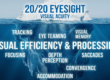
Vision plays a major role in how we process and interact with the world around us. In fact, vision leads development, serving as the foundation for cognition and learning.
Research has found that individuals with autism may experience a higher prevalence of visual issues, including:
- Refractive errors such as farsightedness, shortsightedness, or astigmatism
- Strabismus (eye turn or squint)
- Oculomotor dysfunction (difficulty with eye movements and tracking)
- Accommodative and convergence issues (trouble focusing or using both eyes together)
- Amblyopia (lazy eye)
- Reduced visual-spatial skills leading to clumsiness or poor coordination
- Light sensitivity and delayed pupillary response
- Difficulty integrating visual and auditory information
These challenges can affect reading, writing, coordination, and overall learning—especially when left undetected.
How Optometrists Can Help
Because many individuals with autism already experience sensory sensitivities, it’s essential to ensure that vision isn’t adding to the strain. Early eye evaluations can identify whether visual challenges are contributing to learning, behaviour, or motor difficulties.
Spectacles or vision therapy may significantly improve comfort and function. Lightly tinted lenses can also reduce light sensitivity, making daily activities less stressful.
At our practice, we take a sensory-sensitive approach to care:
- Calmer lighting levels (below 400 lumens)
- Soft, calming visuals and colours
- Clear explanations before each test to reduce anxiety
- The option to record a short introductory video before the appointment, so the patient knows what to expect
Even if a patient is non-verbal, we use objective testing methods to accurately measure visual function and prescription—ensuring every person receives individualised, compassionate care.
Creating Safe and Supportive Eye Care for Autism
Every person with autism deserves to feel safe, respected, and understood during an eye examination. With empathy, patience, and proper adjustments, an optometrist can make the experience comfortable while improving overall visual and sensory function.
If you or your child is on the autism spectrum, we invite you to book a comprehensive eye evaluation with our paediatric and behavioural optometry team. Together, we can make vision one less challenge to face.
FAQ’s
Q: Can autism affect vision?
Yes. People with Autism Spectrum Disorder often experience visual issues such as eye coordination problems, light sensitivity, or difficulty with visual processing.
Q: How can an optometrist help someone with autism?
A paediatric or behavioural optometrist can assess both visual clarity and eye coordination, using sensory-sensitive methods to make the exam comfortable and supportive.
Q: What is vision therapy, and how can it help?
Vision therapy uses specialised exercises and activities to improve how the eyes and brain work together, helping with reading, focus, and coordination.