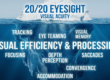
Ever feel clumsy — dropping things, bumping into door frames, or finding it hard to park straight? You could have a condition called Vertical Heterophoria (VH), a subtle but impactful binocular vision disorder that often goes undetected without a comprehensive eye examination.
What Is Vertical Heterophoria?
Vertical heterophoria refers to a slight vertical misalignment of the eyes. It may be so subtle that it’s not visible to others, yet it can cause significant discomfort. At university, we were taught that vertical misalignments (vertical strabismus) were rare and only seen in extreme cases — but in practice, the milder forms are surprisingly common.
Your brain constantly tries to compensate for this misalignment by making tiny adjustments with the eye muscles. Over time, this effort can cause strain, fatigue, and a variety of symptoms that affect your daily life.
Common Symptoms of Vertical Heterophoria
People with vertical heterophoria often experience symptoms that are easily mistaken for unrelated issues, such as stress or tiredness. These can include:
- Skew or uneven handwriting
- Frequent headaches (especially on one side)
- Dizziness or light-headedness
- Car sickness or motion sensitivity
- Nausea or imbalance
- Clumsiness and poor spatial awareness
- Reduced depth perception
- Losing your place while reading
- Double vision — particularly when lying down
- A habitual head tilt, sometimes causing neck pain (more significant pain on one side)
These symptoms tend to worsen when you’re tired, under visual stress, or spending long hours at a computer.
How Prism Lenses Can Help
The good news is that prism lenses can make a life-changing difference. These lenses work by slightly shifting the direction of incoming light so it enters your eyes at the correct angle — helping the eyes work together more comfortably.
During a comprehensive eye examination, we take highly precise measurements to determine the exact prism correction you need. This ensures that your visual comfort, depth perception, and coordination are improved.
Can Vision Therapy Help?
Some optometrists advocate vision therapy for vertical heterophoria. While this may improve overall visual performance, it typically cannot fully correct a vertical misalignment on its own. At our practice, we often combine prism correction with vision therapy to enhance eye coordination, depth perception, and reading efficiency.
The goal is not only to help you see clearly, but to help your eyes work as a coordinated team — improving your comfort, performance at work or school, and overall quality of life.
Why Early Detection Matters
Many people live for years without realising their symptoms stem from a subtle binocular vision dysfunction. Whether you’re a student struggling to read, a professional battling fatigue, or an athlete aiming for precision, a full binocular vision evaluation can make all the difference.
Take the First Step Toward Visual Comfort
If you experience headaches, dizziness, clumsiness, or difficulty focusing, it might not just be fatigue — it could be Vertical Heterophoria.
Book a comprehensive eye examination at our practice to assess your binocular vision and explore whether prism lenses or vision therapy could help you function at your optimal visual efficiency.
🩵 FAQ
Q: What is vertical heterophoria?
A: Vertical heterophoria is a subtle misalignment of the eyes, causing one eye to sit slightly higher than the other. It affects depth perception and can lead to headaches, dizziness, and eye strain.
Q: Can vertical heterophoria cause dizziness and nausea?
A: Yes. Because the eyes struggle to work together, the brain receives mismatched visual input, which can cause dizziness, nausea, and even motion sickness.
Q: How is vertical heterophoria treated?
A: Treatment often involves prism lenses, which redirect light to help the eyes align, and vision therapy to strengthen eye coordination.
Q: Do I need glasses to correct vertical heterophoria?
A: Even if your eyesight is clear, you might still benefit from prism correction if your eyes are misaligned. An optometrist trained in binocular vision testing can determine this.